
 Русский
 Українська
 Հայերեն
 ქართული
 Қазақша
 Español
 Français
 Deutsch
 Italiano
 فارسی
فارسی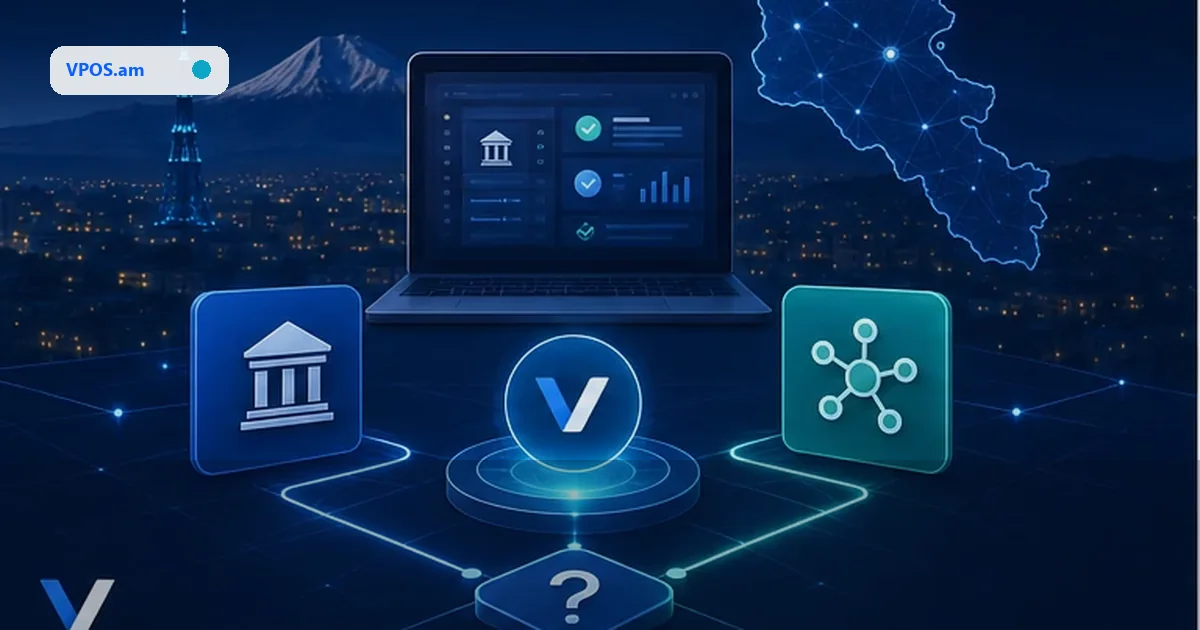
Article focus
Direct vPOS and aggregation solve different problems
The difference is the amount of control and responsibility around the payment lifecycle.
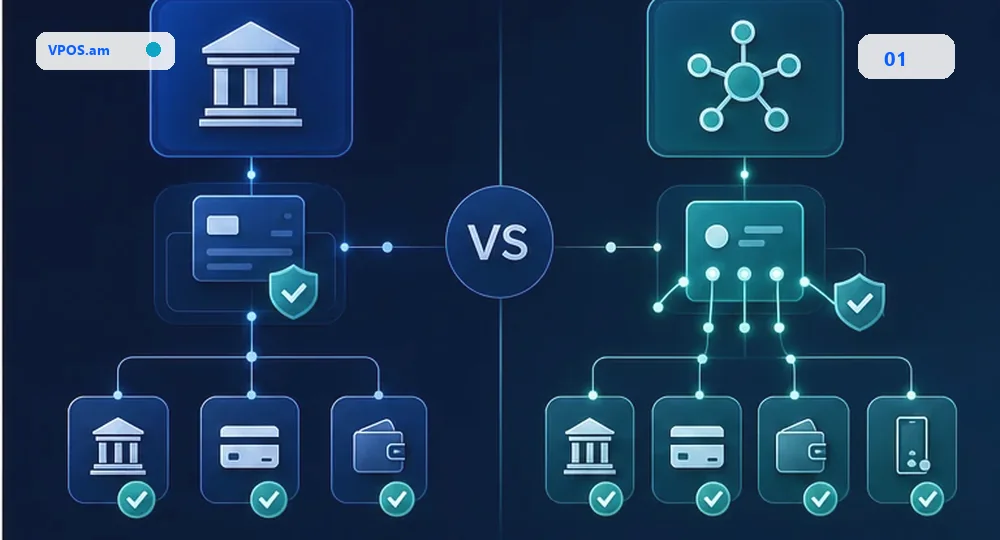
A direct vPOS integration usually gives the merchant a closer relationship with a bank or provider and more control over payment data and operating rules. It also requires the team to handle callbacks, retries, status transitions and support investigations carefully.
An aggregator can shorten a simple launch because it hides part of the provider-specific work behind one interface. The trade-off becomes visible when a payment must update CRM, ERP, fiscal workflows or a non-standard refund process.
- Compare the complete payment lifecycle, not only checkout.
- Keep provider identifiers and normalized statuses on the backend.
- Do not let a frontend redirect decide whether an order is paid.
When a payment orchestration layer is useful
One payment event often needs to reach more than one business system.
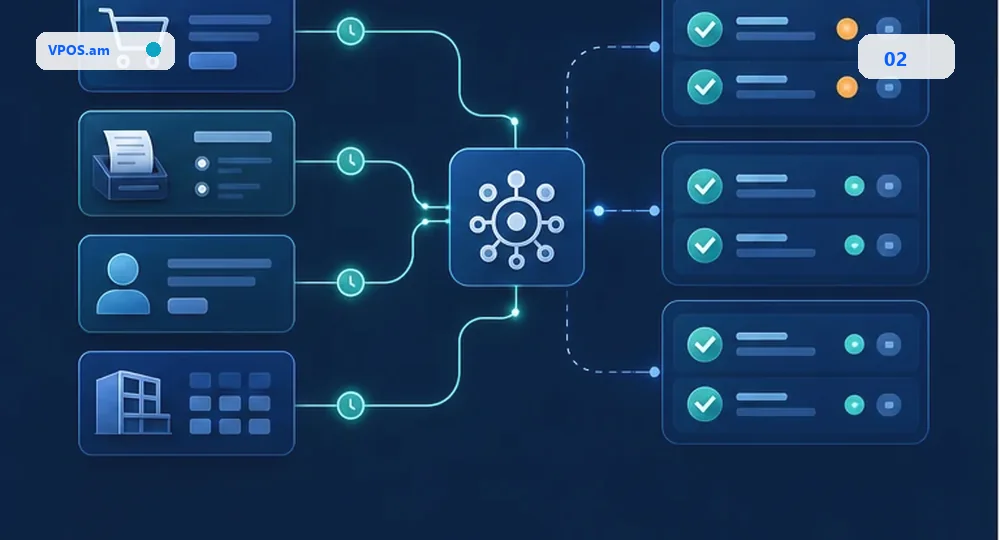
Orchestration becomes useful when payments originate from several channels but must result in one consistent order state. A web checkout, a CRM payment link and a mobile flow should not each invent their own definitions of paid, pending or refunded.
It is also useful when changing or adding a provider must not force a rewrite of business logic in every connected system. The orchestration layer keeps the internal contract stable while provider adapters stay isolated.
- Several payment entry points.
- CRM, ERP or fiscal actions after payment.
- A need for provider migration or failover.
- One audit trail for support and finance teams.
Choose the smallest model that preserves the next step
A pilot does not need maximum complexity, but it must not block safe growth.
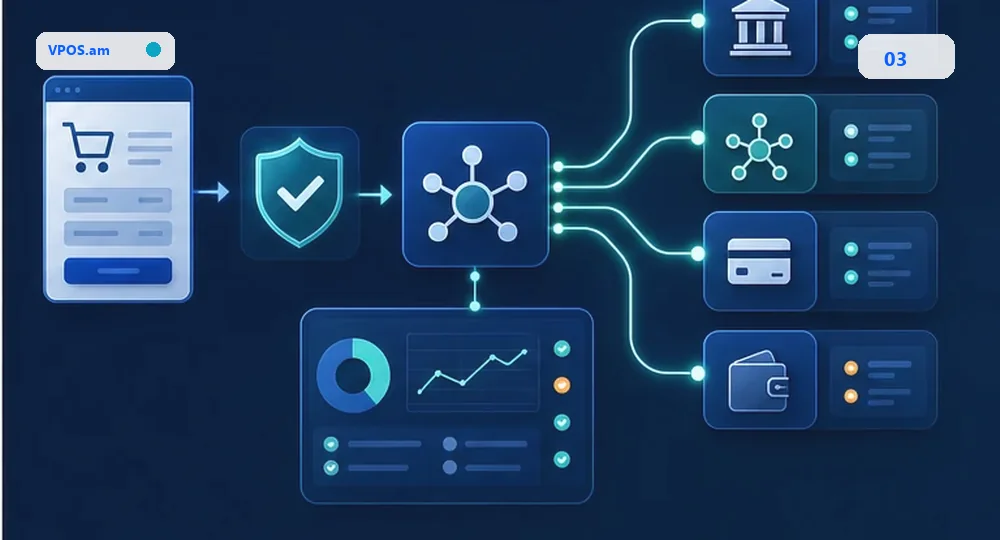
For a small store, one provider and a verified server-side payment status can be enough for the first release. The foundational requirements remain the same: stable order identifiers, idempotency, logs and an explicit refund path.
Before choosing, document where payments enter the business, which system owns an order, and what happens after a verified result. This exposes whether a direct integration is sufficient or a shared payment layer is already justified.
- Start with a controlled payment flow.
- Define ownership of payment status.
- Keep a migration path without changing customer-facing order logic.
FAQ
Can a business start with an aggregator and migrate later?
Yes, when business logic uses normalized internal statuses and does not depend on unstable provider-specific fields.
Does every online store need orchestration?
No. It is most useful when several channels, providers or business systems must share one payment lifecycle.
Should commission be the only selection criterion?
No. Integration reliability, settlement, refunds, support and operational control can have a larger total cost.
Sources and documentation
- VPOS.am API docsAPI and payment lifecycle contract
- Webhooks technical contractDelivery, signature and idempotency boundaries
- VPOS.am securityPublic security and access principles